
Useful tips from educators
Helpful tips from educators for parents: how to teach your child to make friends, share and play with other children.
Every parent wants their children to have friends from an early age. After all, it's very important for a child's socialization and development. But many mothers and fathers don't know how to make friends with their children, and are faced with the problem that their child doesn't want to play with other children, takes their toys, fights and can't play with any of them for even five minutes.
The following useful tips from educators will help you teach your child to make friends with other children.
How to teach your child to make friends: advice from educators?
Tip 1. Teach your child to dialogue.
Dialogue – this is the first step towards communication, and therefore towards friendship. Start with the simplest, for example, give your child a ball and say: «On the ball!» then ask for a toy: «Give me the ball!». Also teach your child to introduce himself, for example in the following way: Hello, baby! What's your name? Your child's first friend will be his favorite toy, who will converse with him and take an interest in his affairs, for example by asking him who he went for a walk outside with, what he saw on the playground, what the other children did on the playground, what the baby did on the playground, whether today's lunch was tasty and the like....
Tip 2. Teach your child to share.
From an early age, it's important to explain to your child that sharing is a good thing. For example, say, "Look, you've got two cookies. Give one to Grandma and eat the other yourself. What do you say? It's good for Grandma too. You see you're a good boy, you shared the cookies with your grandma» ;". Do the same with your child's toys in the playground. Teach him to share with family members and children on the playground.
Tip 3. Play with your child.
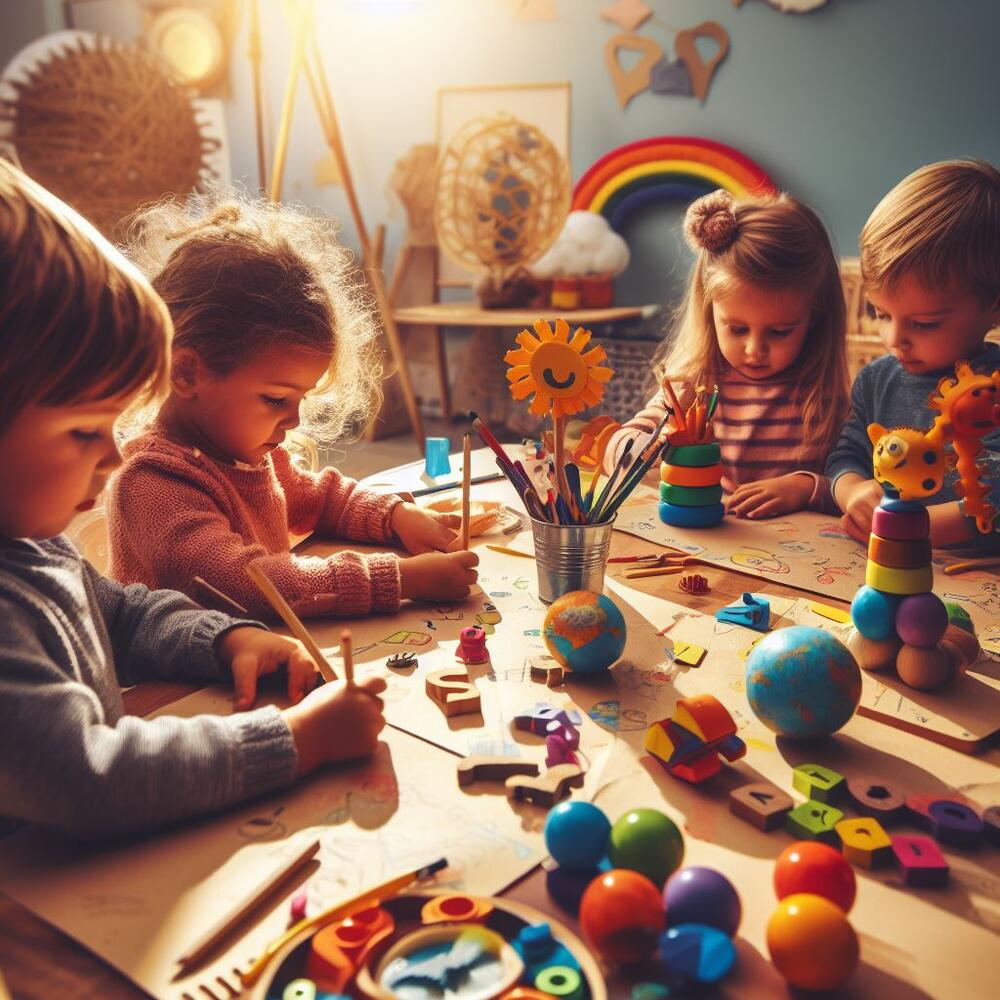
When you play with your child, you teach him to interact not only with toys, but also with the people around him. Role-playing games such as "Shop", "Mother Daughters" and others are very useful in this respect. Try to get the child interested in the game, by being on the playground and drawing other children into your shared play.
Tip 4. Take your child to visits where there are other children.
When you go to visits where there are children, introduce your child to other children and encourage them to play a favorite game together, such as «Catch-up» «Hide-and-seek». Tell your baby how nice this boy or girl is and how much he/she wants to play with him/her. Invite families with children to your home to spend some quality time together. Tell your child how good and fun it is to be friends with other children.
Tip 5. Attend an early-learning group with your child.
In an early-learning group, an experienced teacher will always find a personalized approach for your child and help him learn to make friends with other children. In an early-learning group, your child will also learn to think logically, count, read, speak correctly, etc. Your child will be fully involved in the educational process, which is always conducted in a playful way.
KIDSUP plans to offer early learning programs again in the future; you can join the interest list on the early learning page.
 Kindergarten reading readiness in Ottawa: early reading screening and new help from school boardsKindergarten readiness in reading: Ontario’s first early reading screening ends mid-November, OCSB Literacy at Home and the OCDSB webinar on November 25.
 Ontario education unions vote on strikes this November: what Ottawa families can plan nowOntario teacher strike vote 2026: CUPE, OSSTF and ETFO vote November 4–18. Legal steps before any strike, Ottawa PA days and backup care in Kanata.
- Your child’s EQAO Grade 3 results: how to read the Individual Student ReportEQAO Grade 3 Individual Student Report explained: what Levels 1–4 mean, report cards, questions for the teacher and the 2027 test dates.
- Ontario’s new Kindergarten curriculum is in classrooms: what changed in 2026Ontario’s Kindergarten curriculum, 2026 replaced the 2016 program: four strands, reading, math to 20, coding and a reading screening on the report.
 Setting Boundaries: Routines, Stability and TrustHow to set clear boundaries, build predictable daily routines and keep a trusting relationship with your child, with practical steps for busy families.
 Being Involved in Your Child's School Learning in OntarioPractical ways to support your child's learning in Ontario: talking about school, homework routines, report cards, parent-teacher interviews and breaks.
 How to Support Your Child's Creativity at HomeHelp your child's creativity grow: focus on the process, set up a budget-friendly creative corner, and use cooking, crafts and building as creative play.
 Playing and Learning: How to Turn Learning into PlaySimple games for numbers and letters, tips to balance screen time, and ideas for learning through play on PD days, winter break and March Break.
 Speech and Communication Skills: Games and Everyday PracticeEveryday games and habits that build speech, listening and communication skills, tips for bilingual homes in Ottawa, and when to ask a professional.
 Household Chores for Kids: Teaching Responsibility and IndependenceAge-appropriate chores for kids aged 2 to 12, how to teach each task step by step, and routines that help children grow responsible and independent.
 Praise, Confidence and Positive Reinforcement for KidsHow specific praise, positive reinforcement, shared activities and better daily communication help children build lasting confidence and self-esteem.
 EQAO Grade 3 results 2026: what Ontario’s new scores mean for children aged 4–6EQAO Grade 3 results 2026: 75% of Ontario students met the reading standard, 67% writing, 65% math. What the scores mean for children aged 4–6 and the skills to build…
 Kindergarten readiness checklist for Ontario parents: skills to build at 4 and 5Kindergarten readiness checklist for Ontario parents: language, early math, fine motor, independence. Skills by age 4 and 5 and a printable list.